Disclosure: This post contains affiliate links. We may earn a small commission if you purchase through our links, at no extra cost to you.
The Park That Changes Everything
There are national parks that are beautiful. And then there is Rocky Mountain National Park — a place that makes you feel genuinely small in the best possible way. At over 14,000 feet above sea level, with elk grazing in alpine meadows and tundra stretching to the horizon, it's the kind of landscape that resets something in you. And in your kids.
We visited Rocky Mountain National Park with our three kids — ages 6, 9, and 12 — in late July, which is peak season and also, we discovered, the absolute best time to see wildflowers and wildlife. We spent four nights based in Estes Park, Colorado, and hiked every day. This is our complete guide to what worked, what didn't, and how to make the most of a family trip to one of America's most spectacular parks.
The Altitude Reality Check
The first thing you need to know about Rocky Mountain National Park is that the altitude is real. Estes Park sits at 7,522 feet. Trail Ridge Road, the park's famous scenic drive, reaches 12,183 feet. If your family is coming from sea level, you will feel it.
We're from Atlanta — about 1,000 feet above sea level — and the altitude hit us harder than we expected. Our first day, we drove Trail Ridge Road and stopped at the Alpine Visitor Center at 11,796 feet. Walking from the parking lot to the visitor center, about 200 yards, left us all slightly breathless. Our youngest complained of a headache. We spent the rest of day one doing nothing more strenuous than walking around Estes Park.
By day two, we felt significantly better. By day three, we were hiking normally. The lesson: plan your first day as an acclimatization day. Don't try to hike on day one. Drink extra water, eat lightly, and let your body adjust. The Liquid I.V. Hydration Multiplier packets were genuinely helpful here — we mixed them into the kids' water bottles each morning and they stayed much better hydrated than they would have otherwise.
Trail Ridge Road: The Drive That Earns Its Reputation
Before we get to the hiking, Trail Ridge Road deserves its own section. This 48-mile scenic drive crosses the Continental Divide and reaches above treeline, offering views that are simply not available anywhere else in the continental United States. It is, without question, the most spectacular drive we've ever taken as a family.
We drove it on day one (before we knew better about altitude), stopped at every pullout, and spent about four hours covering the full length. The kids were glued to the windows. Elk were visible from the road at multiple points. The tundra landscape above treeline — vast, windswept, otherworldly — produced genuine awe in all three of our children, including our 12-year-old who is normally too cool to be impressed by anything.
Drive it early in the morning if possible. The light is better, the crowds are smaller, and the wildlife is more active. The road typically opens in late May and closes in October due to snow.
The Trails We Hiked
Rocky Mountain National Park has over 350 miles of trails ranging from easy valley walks to serious alpine climbs. With kids, the key is choosing trails that have a clear destination, manageable elevation gain, and enough visual interest to keep everyone engaged. Here are the four trails we hiked and our honest assessment of each.
Bear Lake Loop (0.8 miles, easy)
This is the most accessible trail in the park — a flat loop around a stunning glacial lake at 9,475 feet, surrounded by peaks. It's short enough for any age, beautiful enough to feel like an achievement, and serves as the hub for several longer trails. We did it on day two as our first real hike and it was the perfect reintroduction to hiking after a day of acclimatization.
The Bear Lake trailhead is extremely popular. Take the park shuttle from the Glacier Gorge Trailhead parking area — driving to Bear Lake directly is nearly impossible after 9 a.m. in summer.
Emerald Lake Trail (3.6 miles round trip, moderate)
This is the trail we'd recommend to any family visiting Rocky Mountain. Starting from Bear Lake, it passes three alpine lakes — Nymph Lake, Dream Lake, and Emerald Lake — each more beautiful than the last. The elevation gain is gradual, the trail is well-maintained, and the payoff at Emerald Lake (surrounded by peaks, with Hallett Peak reflected in the water) is extraordinary.
Our kids wore their KEEN Targhee Mid Waterproof boots on this trail and were grateful for them — the trail crosses several rocky sections and a few small stream crossings. Our 9-year-old carried her Osprey Kids' Moki Hydration Pack and managed the full trail without assistance. Total time: about 2.5 hours with stops.
Sprague Lake Loop (0.5 miles, easy)
This was our rest-day trail — a completely flat, accessible loop around a beautiful lake with views of the Continental Divide. We did it on our third afternoon when everyone was tired from the previous day's longer hike. It took about 30 minutes, required no effort, and reminded us why we were there: the views are extraordinary even from the flattest, easiest trail in the park.
Flattop Mountain Trail (8.8 miles round trip, strenuous)
This was our ambitious trail — the one we debated for two days before committing. It climbs 2,849 feet to the summit of Flattop Mountain at 12,324 feet, crossing above treeline into the alpine tundra. We did it with our 12-year-old and 9-year-old (our 6-year-old stayed at the cabin with a grandparent).
Our 12-year-old used his Black Diamond Kids' First Strike Trekking Poles for the entire ascent and descent. They were essential — the trail is steep and rocky in the upper sections, and the poles provided critical stability. Our 9-year-old surprised us completely: she set a steady pace, never complained, and reached the summit with energy to spare.
The summit views were unlike anything we'd ever seen. Tundra in every direction. The Continental Divide stretching north and south. A herd of elk visible in a valley far below. Our 12-year-old, who had been skeptical about the whole trip, stood at the summit and said: "Okay. This is actually incredible."
Snack strategy for this trail: we brought Mission Meats Mini Beef Sticks, Justin's Peanut Butter Squeeze Packs, Country Archer Mini Beef Sticks, and Nuun Sport Electrolyte Tablets in every water bottle. At altitude, hydration and protein are non-negotiable. We stopped every 45 minutes for a snack break and it made a significant difference in everyone's energy and mood.
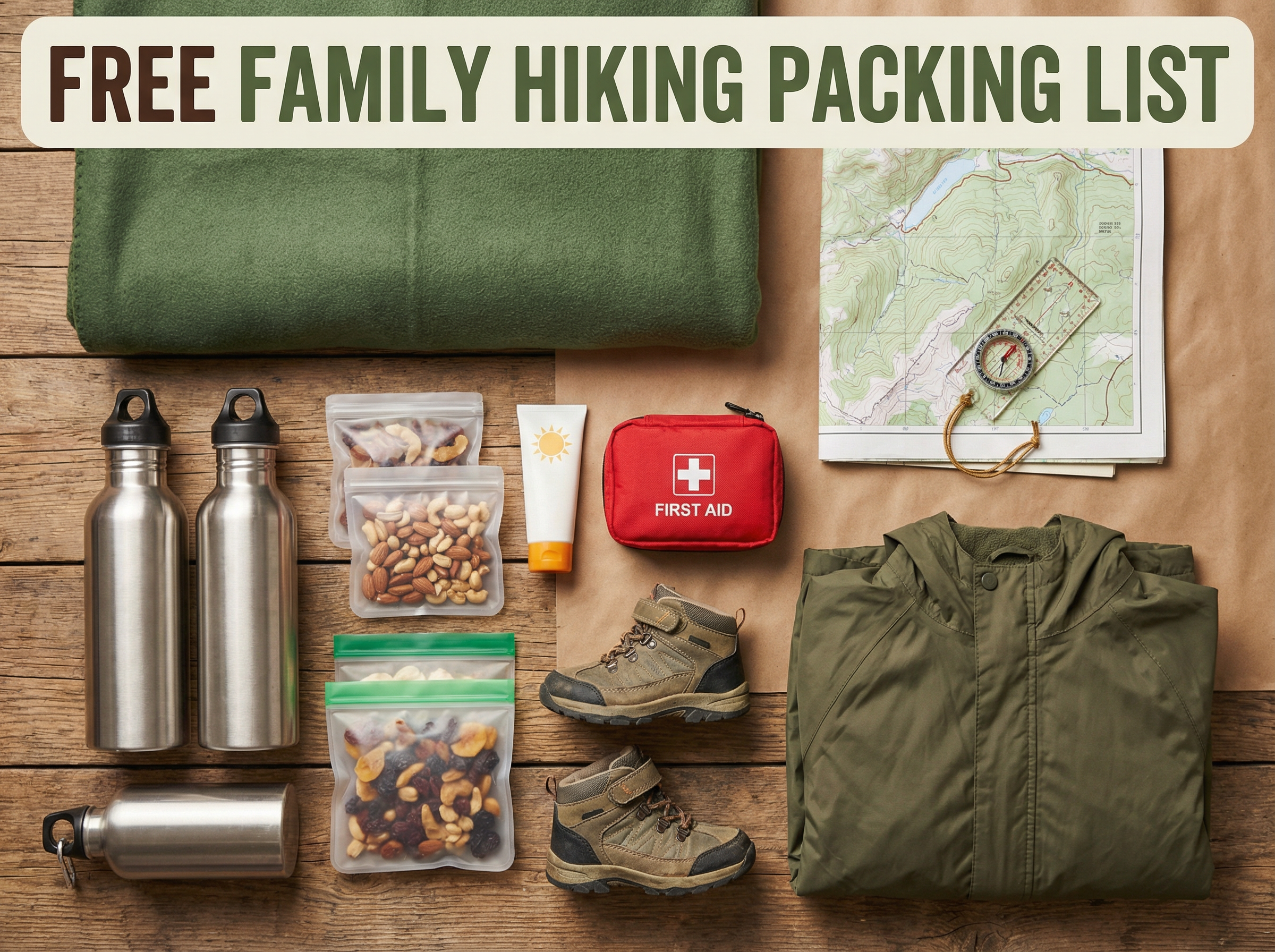
Planning a Rocky Mountain trip? High altitude hiking requires different preparation than sea-level trails. Our free Family Hiking Checklist covers everything you need: what to wear, what to carry, how to keep kids fueled and hydrated at altitude, and what to do when something goes wrong. Download it before you go.
The Wildlife
Rocky Mountain National Park has one of the largest elk herds in North America — about 3,000 animals. In late July, the elk are in the high meadows, and sightings are almost guaranteed if you know where to look. We saw elk on every single day of our trip, including a herd of about 40 animals grazing in Horseshoe Park on our last morning.
We also saw mule deer, a marmot colony near the Flattop trailhead, several pikas (small rabbit-like animals that live in rocky alpine terrain), and a moose in a willow thicket near the Kawuneeche Valley. The moose sighting was unexpected and extraordinary — a massive bull standing about 50 yards from the road, completely unbothered by our presence.
Our kids used the park's Junior Ranger program to track their wildlife sightings, which added a layer of engagement and purpose to every drive and hike. By the end of the trip, our 9-year-old had completed her Junior Ranger booklet and received her badge from a park ranger — a moment she still talks about.
Practical Tips for Families
Get the timed entry permit.
Rocky Mountain National Park requires timed entry permits during peak season (late May through mid-October). These are free but must be reserved in advance at recreation.gov. We booked ours six weeks out and had no trouble getting our preferred entry times. Don't skip this step — without a permit, you may be turned away at the entrance.
Layer aggressively.
Mountain weather changes fast. We started the Flattop hike in sunshine and 65°F temperatures. By the time we reached the summit, it was 48°F with a strong wind. Our kids wore Patagonia Kids' Capilene Lightweight Crew base layers under their fleeces, which made the temperature swings manageable. Always carry a rain layer — afternoon thunderstorms are common in summer and can develop quickly.
Start every hike before 9 a.m.
Afternoon thunderstorms are a serious hazard above treeline. The standard rule in the Rockies is to be off exposed ridges and summits by noon. We started every hike by 7:30 a.m. and were back at the trailhead by early afternoon. This also meant we had the trails largely to ourselves for the first few hours.
Use the park shuttles.
The Bear Lake corridor is extremely congested in summer. The park operates free shuttles from the Estes Park Visitor Center and the Park & Ride lot. We used the shuttle every day for Bear Lake area trails and never had to worry about parking. The kids loved the shuttle — it felt like part of the adventure.
What We'd Do Differently
We'd spend more time on the west side of the park. The Kawuneeche Valley and the Colorado River Trail are quieter, less crowded, and offer a completely different landscape than the Bear Lake corridor. We only spent one afternoon on the west side and wish we'd allocated more time.
We'd also book a ranger-led program. Rocky Mountain offers free ranger-led hikes, evening programs, and Junior Ranger activities throughout the summer. We attended one evening program at the Moraine Park Amphitheater and it was excellent — the kids were completely engaged and learned more about the park's geology and wildlife than they had from any guidebook.
Would We Go Back?
Without hesitation. Rocky Mountain National Park is one of those places that reveals itself slowly — the more time you spend there, the more you see. We barely scratched the surface in four days. There are trails we didn't hike, valleys we didn't explore, and wildlife we didn't see. Our 12-year-old has already asked if we can come back and attempt Longs Peak when he's older.
More than any specific trail or wildlife sighting, what we took home from Rocky Mountain was a sense of scale. The mountains are genuinely enormous. The sky is genuinely vast. And your kids, standing at 12,000 feet with the Continental Divide stretching in both directions, are genuinely capable of more than you thought.
That's the gift the mountain gives. Go find out for yourself.