
Disclosure: This post contains affiliate links. We may earn a small commission if you purchase through our links, at no extra cost to you.
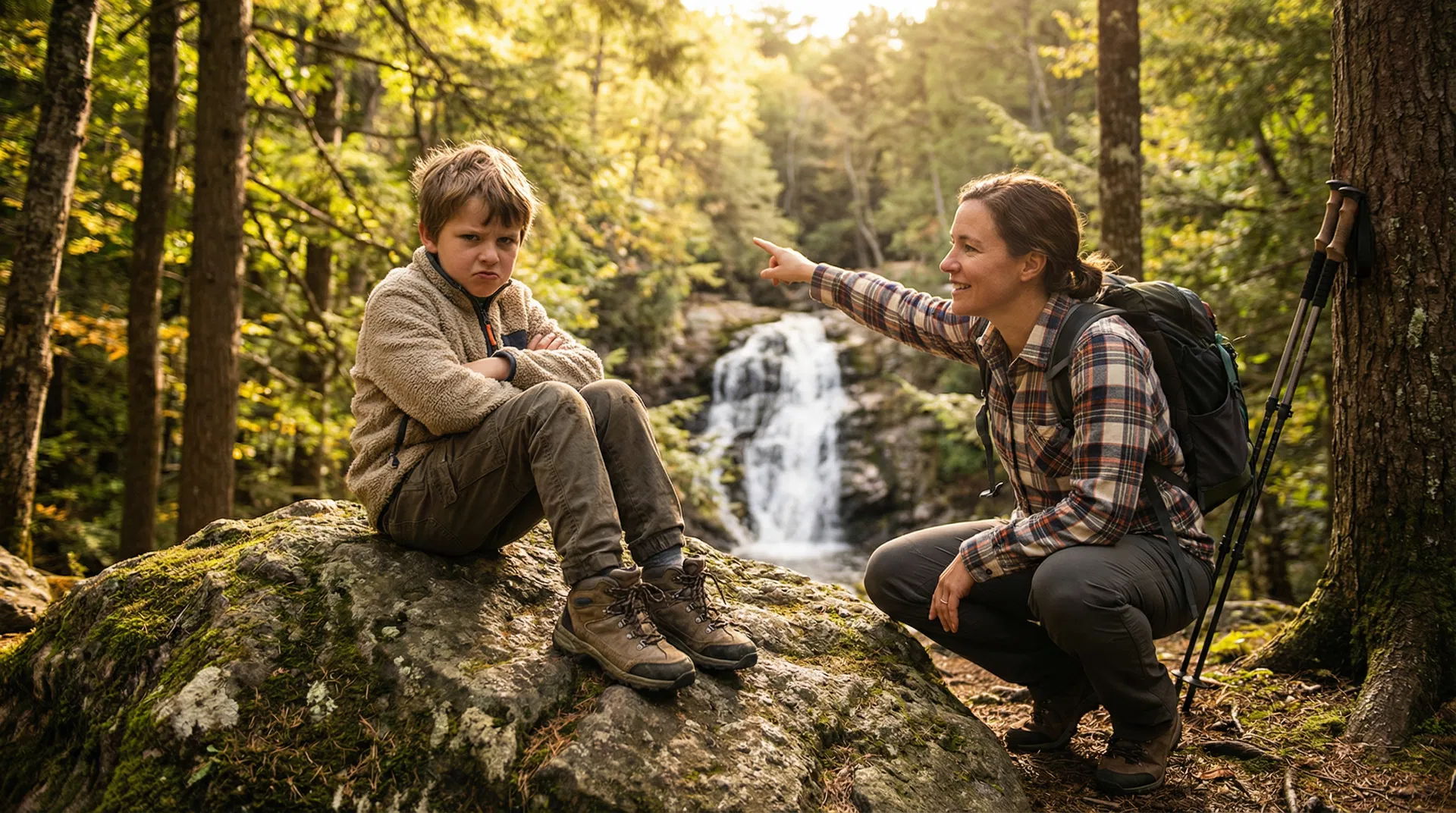
Every parent of a school-age child has been there. The car is packed, the trail is chosen, the weather is perfect — and the kid in the back seat announces, with complete conviction, that they do not want to hike. They want to go home. They want to play video games. They want to do literally anything other than walk through the woods. If this sounds familiar, check out our backyard mountain challenge as a lower-pressure entry point.
This is not a character flaw. It is a developmental reality. Children between five and twelve are in the middle of building their sense of autonomy, and being told to do something — even something objectively good for them — triggers resistance. The solution is not to force the issue. It is to change the frame.
These five strategies consistently work with reluctant hikers. They are not tricks or bribes — they are ways of making the trail feel like the kid's idea rather than the parent's mandate.
1. Give Them a Job
A child with a job is a child who is engaged. Before the hike, assign each child a specific role: trail leader (they walk in front and choose the pace), wildlife spotter (they are responsible for identifying animals and birds), navigator (they hold the map and tell the group which way to go), or photographer (they carry a cheap camera or old phone and document the trip).
The job should be real, not performative. The trail leader actually leads. The navigator actually makes decisions. When kids feel genuinely responsible for something, they invest in the outcome.
For older kids who are resisting because hiking feels "babyish," the navigator role is particularly effective. Handing a ten-year-old a topographic map and a compass and saying "you're in charge of getting us there" reframes the entire experience as a challenge rather than a chore.
Plan your next trail day
The free Made for the Mountain Family Hiking Checklist helps you pack everything you need — so the logistics are handled and you can focus on keeping the kids engaged.
Get it free →2. Build In a Destination That Matters to Them
"We're going for a hike" is not motivating. "We're going to find a waterfall" is. "We're going to climb to the top of that rock and see if we can spot the town from up there" is even better.
The destination needs to be something the child actually cares about, not something the parent thinks they should care about. For some kids, that is a waterfall. For others, it is a fire lookout tower, a cave, a suspension bridge, or a spot where the parent has promised they can skip rocks for as long as they want.
Before the hike, research the trail together. Show the kids photos of the destination. Let them look it up themselves. The more ownership they feel over the choice of destination, the more invested they are in reaching it.
3. Let Them Set the Pace
One of the most common reasons kids resist hiking is that they have been pushed too hard on previous hikes. They remember the burning legs, the endless uphill, the feeling of being dragged along at an adult pace. That memory is a powerful deterrent.
On the next hike, let the child set the pace entirely. Walk behind them. Stop when they stop. If they want to spend fifteen minutes examining a spider web, spend fifteen minutes examining a spider web. The goal is to rebuild a positive association with the trail — and that requires letting the child's experience take priority over the adult's agenda.
This approach works best on shorter trails where there is no time pressure. A one-mile hike that takes two hours because the child led every step is a successful hike.
4. Bring the Right Gear
Reluctant hikers are often reluctant because they have been uncomfortable on previous hikes. Wet feet, blisters, sunburn, and thirst are all preventable — and all of them create negative associations with the trail. For a comprehensive breakdown of essential gear, see our complete guide to hiking gear essentials.
Proper footwear is the most impactful gear investment for school-age kids. The Merrell Kids' Moab 3 is waterproof, grippy, and comfortable enough for a full day on the trail. Kids who have dry, blister-free feet are kids who are willing to go back.
For older kids who are ready to carry their own pack, a small daypack gives them a sense of independence and responsibility. The CamelBak Mini M.U.L.E. includes a hydration reservoir, which means kids can drink whenever they want without asking a parent — a small but meaningful form of autonomy on the trail.
Trekking poles for kids ages eight and up are another surprisingly effective engagement tool. The Black Diamond Trail Trekking Poles make kids feel like real hikers — and kids who feel like real hikers act like real hikers.
5. Make the Trail Compete with Screens on Its Own Terms
The honest challenge of hiking with screen-age kids is that the trail has to compete with a device that has been engineered by the smartest people in the world to be as engaging as possible. The trail cannot win that competition on the screen's terms.
But the trail offers something screens genuinely cannot: physical sensation, unpredictability, and the specific satisfaction of having done something hard. The key is making those qualities visible to kids who have not yet learned to value them.
A pocket magnifier turns a walk into an exploration. A field guide to local birds or insects gives kids a reason to pay attention to what is around them. A simple challenge — "find five different types of leaves before we reach the bridge" — creates the kind of low-stakes engagement that makes the trail feel like a game rather than a chore.
Over time, as kids accumulate positive trail experiences, the resistance fades. The trail becomes familiar, and familiar becomes comfortable, and comfortable becomes something they actually look forward to. That transition does not happen in one hike. It happens over a season, or a year, of consistent, positive outings. Our 1000-hour roadmap provides a structured approach to building this consistency.
The goal is not to win the argument about whether hiking is better than screens. The goal is to make the trail so consistently enjoyable that the argument stops coming up.
Get the Free Family Hiking Checklist
Pack smarter, hike better. The free checklist covers everything you need for a day on the trail with kids of any age.
Download the Free Checklist →This article contains affiliate links. Made for the Mountain may earn a small commission on purchases made through these links at no additional cost to you.