
Disclosure: This post contains affiliate links. We may earn a small commission if you purchase through our links, at no extra cost to you.
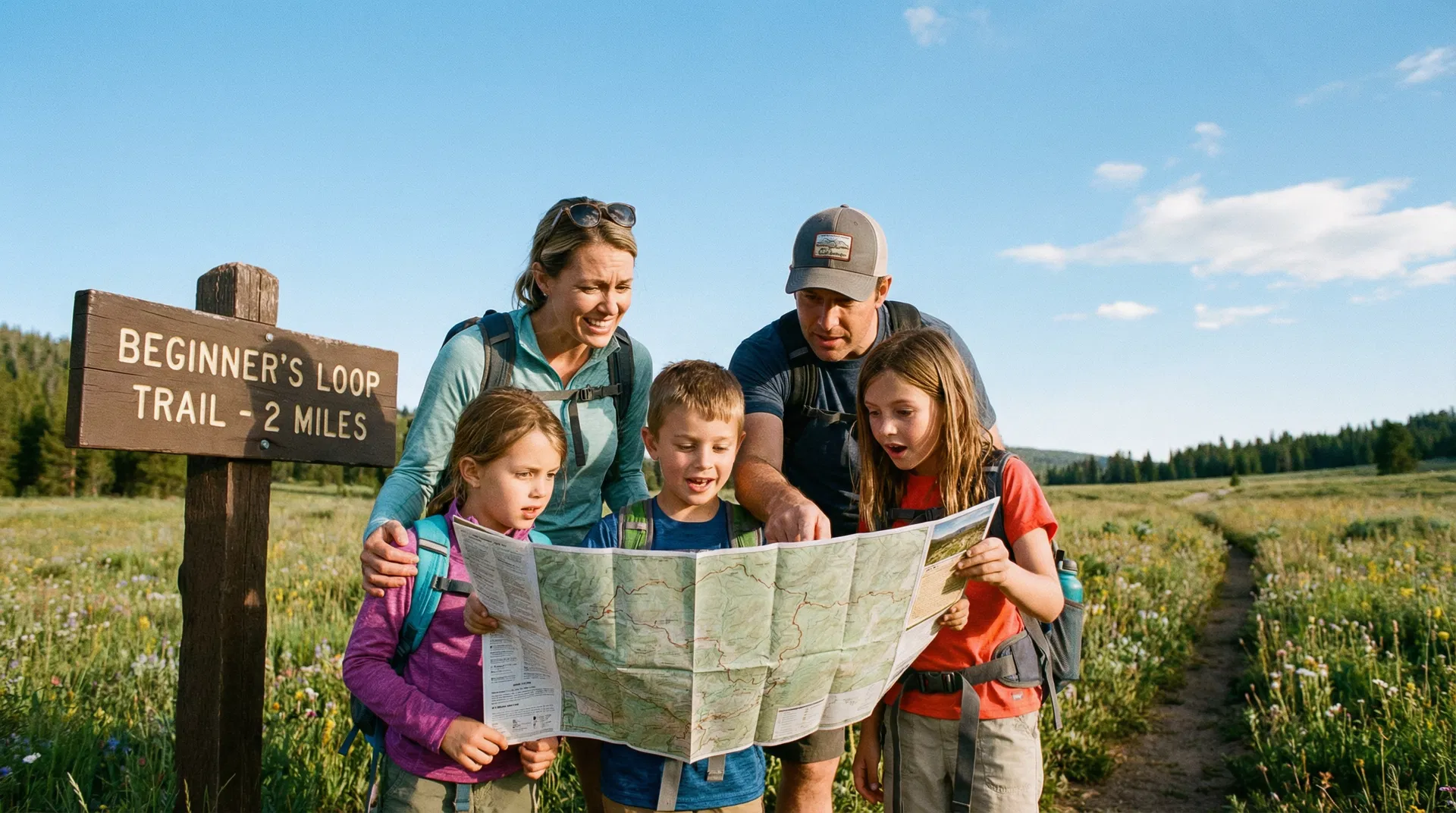
The first family hike is one of those experiences that can go one of two ways. Done right, it becomes a story the family tells for years — the day everyone discovered they loved the trail. Done wrong, it becomes the reason nobody wants to go back.
The difference almost always comes down to preparation. Not gear, not fitness, not the trail itself — preparation. Families who plan their first hike thoughtfully, set realistic expectations, and know what to do when things get hard almost always have a good time. This guide covers everything a first-time hiking family needs to know, from choosing the right trail to handling the inevitable moment when someone says they want to go home. If your kids are new to outdoor play, start with the backyard mountain challenge to build confidence first.
Step 1: Choose the Right Trail
The single most important decision in planning a first family hike is trail selection. Choose a trail that is too long or too difficult, and the experience becomes a slog. Choose one that is appropriately short and interesting, and the family finishes wanting more.
For a first hike with children under ten, aim for a trail that is one to three miles round trip with less than 300 feet of elevation gain. The trail should have at least one interesting feature — a waterfall, a creek, a viewpoint, a large rock to climb — that gives the hike a destination beyond "the end."
AllTrails is the most useful tool for finding family-appropriate trails near any location. Filter by "easy" difficulty and look for trails tagged "kid-friendly." Read recent reviews to check current conditions — a trail that is described as muddy or has a washed-out section is not the right choice for a first outing.
Don't forget the checklist
The free Made for the Mountain Family Hiking Checklist covers everything you need to pack for a first hike — organized by age and activity so nothing gets left behind.
Get it free →Step 2: Pack the Essentials
First-time hiking families often make one of two mistakes: they pack too much (turning the day into a gear-hauling exercise) or too little (running out of water at mile one). Here is what actually matters.
Water
Bring more than you think you need. The standard recommendation is half a liter per person per hour of hiking, but with kids who are running ahead and burning more energy, plan for a full liter per person for a two-hour hike. The Hydro Flask Kids Wide Mouth keeps water cold for hours and is durable enough to survive being dropped on rocks.
Snacks
Snacks are the most powerful motivational tool on the trail. Pack more than you think you need, and use them strategically — offer a snack at the halfway point, at the destination, and whenever energy starts to flag. For detailed guidance, see our complete guide to hiking snacks that won't melt or crush in your pack.
Footwear
Proper footwear is the most important gear decision for kids. Sneakers work on paved or groomed trails, but for anything with rocks, roots, or creek crossings, waterproof hiking boots with ankle support make a significant difference in both comfort and safety. The Merrell Kids' Moab 3 is the most trail-tested option for families and available in sizes from toddler through youth.
Sun Protection
Apply broad-spectrum SPF 50+ sunscreen before leaving the car and bring it for reapplication. A sun hat for every member of the family is equally important — the trail canopy provides less shade than most people expect, especially on exposed sections.
First Aid Kit
A compact trail first aid kit belongs in every family pack. Minor injuries — blisters, scrapes, bee stings — are common on the trail, and being prepared means they stay minor. For a comprehensive breakdown of what to pack, read our guide to trail first aid essentials.
Layers
Mountain weather changes quickly. Even on a warm day, bring a lightweight layer for every member of the family. A child carrier with storage compartments makes it easy to carry extra layers without adding bulk to the kids' packs.
Step 3: Set Expectations Before You Leave
The car ride to the trailhead is the best time to set expectations. Tell the kids what the hike will look like: how long it is, what they will see, and what the plan is if someone gets tired. "We're going to hike to the waterfall — it's about a mile. If you get tired, we can take a break or I can carry you for a bit. We'll have a snack when we get there."
For younger children, frame the hike as an adventure with a specific destination. "We're going to find the big waterfall" is more motivating than "we're going for a hike." Give them a role: trail leader, wildlife spotter, snack carrier. A child with a job is a child who is engaged.
Step 4: Pace Yourself
The most common mistake first-time hiking families make is starting too fast. Adults set a pace that feels comfortable to them — and it is too fast for children. Start slow, plan for frequent short breaks, and let the kids set the pace on the uphill sections.
A useful rule of thumb: plan for a pace of one mile per hour with children under eight, and one to one-and-a-half miles per hour with children eight and up. These numbers feel slow to adults, but they account for the stops, the detours, and the inevitable moments when someone needs to examine a particularly interesting rock.
Step 5: Handle the Hard Moments
Every first family hike includes at least one hard moment. Someone gets tired. Someone trips and scrapes a knee. Someone decides they hate hiking and wants to go home. Here is how to handle each one.
Tired kids: Offer a snack and a short rest. If the child is genuinely exhausted, use the carrier or turn around without guilt. A short hike that ends positively is worth more than a long hike that ends in tears.
Minor injuries: Stay calm, treat the injury matter-of-factly, and get back on the trail quickly. Making a big deal of a scrape teaches kids to make a big deal of scrapes. A calm, competent response teaches them that minor injuries are a normal part of adventure.
"I want to go home": Acknowledge the feeling without immediately acting on it. "I hear you — this part is hard. Let's make it to that big rock up ahead and then we'll decide." Most kids who say they want to go home are actually just bored or hungry. A snack and a destination usually resolve it.
After the Hike
The post-hike ritual matters as much as the hike itself. Celebrate what the family accomplished — specifically and genuinely. "You hiked two miles today. That's really far." Let the kids lead the debrief: what was their favorite part? What did they see that surprised them?
If the hike went well, plan the next one before the car is out of the parking lot. The momentum of a good first experience is the most powerful tool a hiking family has. Ready to build a consistent outdoor habit? Check out our 1000-hour roadmap for busy families to keep the momentum going.
Get the Free Family Hiking Checklist
A complete, printable packing guide for your first family hike — and every hike after that.
Download the Free Checklist →This article contains affiliate links. Made for the Mountain may earn a small commission on purchases made through these links at no additional cost to you.