
Disclosure: This post contains affiliate links. We may earn a small commission if you purchase through our links, at no extra cost to you.
The wrong snacks can ruin a hike faster than bad weather. A melted chocolate bar at the bottom of a pack, a juice box that exploded on the trail map, or a bag of chips that turned to dust before the first switchback — these are not minor inconveniences. They are morale crises. Choosing trail snacks for kids is a logistics problem that most parents solve incorrectly, defaulting to whatever is easy to grab at the grocery store rather than what actually performs in the field. For a complete packing strategy, see our beginner's guide to your first family hike.
This guide applies a simple framework — the Glycemic Index — to help parents choose snacks that provide sustained energy, survive the conditions inside a pack, and motivate kids without triggering sugar crashes on the descent.
Why the Glycemic Index Is Your Best Trail Planning Tool
The Glycemic Index (GI) measures how quickly a food raises blood sugar. High-GI foods (white bread, juice boxes, gummy snacks) cause a rapid spike followed by an equally rapid crash. On the trail, that crash manifests as sudden lethargy, irritability, and the dreaded "I can't walk anymore" declaration — usually at the point farthest from the trailhead. This is why understanding the physical demands of hiking helps you plan better nutrition.
Low-to-medium GI foods (nuts, seeds, meat sticks, dried fruit) release energy slowly and steadily, keeping blood sugar stable for hours. The goal is to keep kids in a sustained energy zone throughout the hike, not to fuel them in bursts. This sustained energy is especially important for longer hikes like those in the Smoky Mountains.
The "No-Go" List: Popular Snacks That Fail on the Trail
Before covering what works, it is worth being specific about what does not. Chocolate bars melt above 75°F — which is most of spring, summer, and early fall. Juice boxes are heavy, create waste, and deliver a pure sugar spike. Gummy bears and fruit snacks become a sticky, fused mass in warm temperatures. Chips and crackers crush into powder and provide almost no nutritional value per ounce of pack weight. These are all fine at home. On the trail, they are liabilities.
Planning your pack?
Grab the free Made for the Mountain Family Hiking Checklist — includes a complete snack and hydration section built for families with kids of all ages.
Get it free →The 5 Nutrition Categories for Trail Success
Category 1 — The 'Constant Graze': Durable Nuts, Seeds, and Dried Fruits
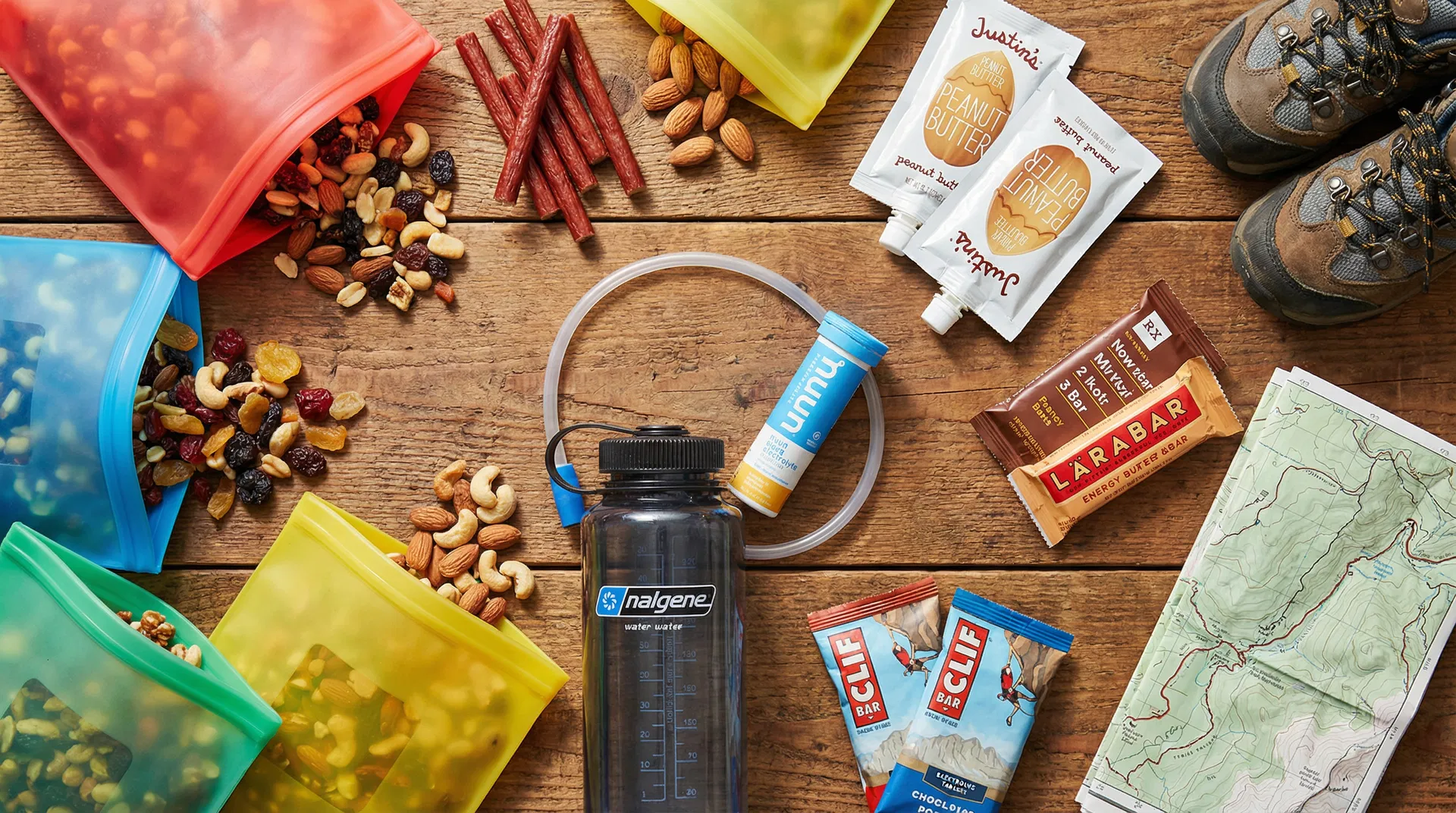
The backbone of any family trail snack strategy is a reliable graze mix. Mixed nuts (almonds, cashews, macadamias), pumpkin seeds, and unsweetened dried fruit (apricots, cranberries, mango) are calorie-dense, temperature-stable, and packable in any container. Aim for a ratio of roughly 70% nuts and seeds to 30% dried fruit to keep the GI low.
Avoid pre-made trail mix from the grocery store — most are loaded with chocolate chips, yogurt-covered raisins, and sweetened cranberries that spike blood sugar and melt in warm weather. Build your own mix in bulk at the start of the season and portion it into reusable silicone bags for each hike.
Category 2 — Protein Power: Beef Jerky, Meat Sticks, and Nut Butter Packets
Protein is the most underrepresented macronutrient in family trail snack kits. Most parents pack carbohydrate-heavy options and wonder why their kids bonk on longer hikes. Protein slows digestion, extends satiety, and prevents the blood sugar swings that cause trail meltdowns.
Meat sticks (Country Archer Mini Beef Sticks, Mission Meats Kids Beef Sticks) are the ideal trail protein: shelf-stable, individually wrapped, and genuinely enjoyed by most kids. Single-serve nut butter packets (Justin's Classic Peanut Butter Squeeze Packs) are equally effective and pair well with apple slices or whole grain crackers for a more complete snack.
Category 3 — Hydration Plus: Electrolyte Powders vs. Sugary Sports Drinks
Water is essential, but on warm days or strenuous climbs, water alone is not enough. Electrolytes — sodium, potassium, magnesium — are lost through sweat and must be replaced to prevent the fatigue and cramping that cut hikes short. For a complete hydration strategy, check out our guide to the best kids' hydration packs.
The best solution is a low-sugar electrolyte tablet or powder added directly to a water bottle. Nuun Sport Electrolyte Tablets and Liquid I.V. Hydration Multiplier are both popular options that dissolve quickly and are available in flavors kids enjoy. Avoid commercial sports drinks — they are heavy, create plastic waste, and most contain more sugar than is appropriate for children on moderate hikes.
Category 4 — The 'Summit Reward': One High-Value Treat to Motivate the Final Climb
Every successful family hike has a summit reward. This is the one high-value, high-excitement treat that is reserved exclusively for reaching the goal — the summit, the waterfall, the overlook. The psychological power of a deferred reward is enormous for children in the 5–12 age range.
The summit reward should be something genuinely special — not a snack they can have anytime. RXBAR Kids protein bars, hard-coated candies (M&Ms are temperature-stable), or a small piece of quality dark chocolate work well. The key is that it is visible, named, and off-limits until the destination is reached.
Category 5 — Emergency Calories: What Lives at the Bottom of the Pack
Every family pack should contain a small emergency calorie reserve that is never touched unless the hike takes significantly longer than planned. The best emergency snacks are the most calorie-dense, stable, and compact options available: macadamia nuts, coconut flakes, dried dates, and high-fat seed bars. These require no preparation, no refrigeration, and survive months in a pack without degrading.
Seal your emergency calorie stash in a waterproof bag and label it clearly so curious hands do not raid it before the hike begins.
Pro-Tip: The Sunday Snack Assembly Line
The single biggest time-saver for a trail-ready family is a weekly snack prep routine. Buy nuts, seeds, and dried fruits in bulk. Every Sunday evening, set up five or six reusable silicone bags on the counter and fill them with pre-portioned graze mixes for the week. Pre-load meat stick pouches and nut butter packets into a dedicated "trail snack bin" in the fridge or pantry.
When Saturday morning arrives and you are trying to get three kids out the door by 7 a.m., you reach into the bin, grab what you need, and go. No measuring, no scrambling, no forgotten snacks.
Quick Reference: Trail Snack Comparison
| Category | Best Option | Packability | GI Level |
|---|---|---|---|
| Constant Graze | Mixed nuts + unsweetened dried fruit | 9/10 | Low–Medium |
| Protein Power | Meat sticks + nut butter packets | 10/10 | Low |
| Hydration Plus | Electrolyte tablets (Nuun) | 10/10 | Low |
| Summit Reward | Hard-coated candies or RXBAR Kids | 8/10 | Medium |
| Emergency Calories | Macadamia nuts + coconut flakes | 10/10 | Low |
The Bottom Line
The formula for a successful family hike is straightforward: graze constantly on low-GI, temperature-stable foods, replenish electrolytes proactively, and save the high-value treat for the summit. Leave the chocolate bars, juice boxes, and sticky fruit snacks at home. Your pack will be lighter, your kids will have more sustained energy, and you will arrive at the summit with clean gear and happy hikers. Pair this snack strategy with our guide on gamifying the trail experience and our guide to hiking as physical therapy for a complete approach to family trail success.
Pack Smarter on Every Hike
Get the free Made for the Mountain Family Hiking Checklist — includes a complete snack and hydration section built for families with kids of all ages.
Download the Free Checklist →This article contains affiliate links. Made for the Mountain may earn a small commission on purchases made through these links at no additional cost to you. We only recommend products we genuinely believe in.