
Disclosure: This post contains affiliate links. We may earn a small commission if you purchase through our links, at no extra cost to you.
The Bottom Line Up Front
Nature Deficit Disorder (NDD) is no longer just a theory — it is a measurable developmental hurdle for children in the digital age. In regions like the Northeast, hiking serves as a primary "physical therapy" by engaging a child's vestibular and proprioceptive systems through uneven terrain and sensory-rich environments. By trading just 60 minutes of screen time for "trail time," parents can provide their children with the same benefits as structured sensory integration therapy — improving focus, mood, and core stability without the clinical price tag.
Why Is Hiking Considered "Physical Therapy" for Modern Kids?
Living on a farm, I see firsthand that children are not built for flat, carpeted surfaces. When kids are sedentary or "glued to screens," their core stability and balance (vestibular health) begin to atrophy. Start with our backyard mountain challenge as a low-barrier entry point.
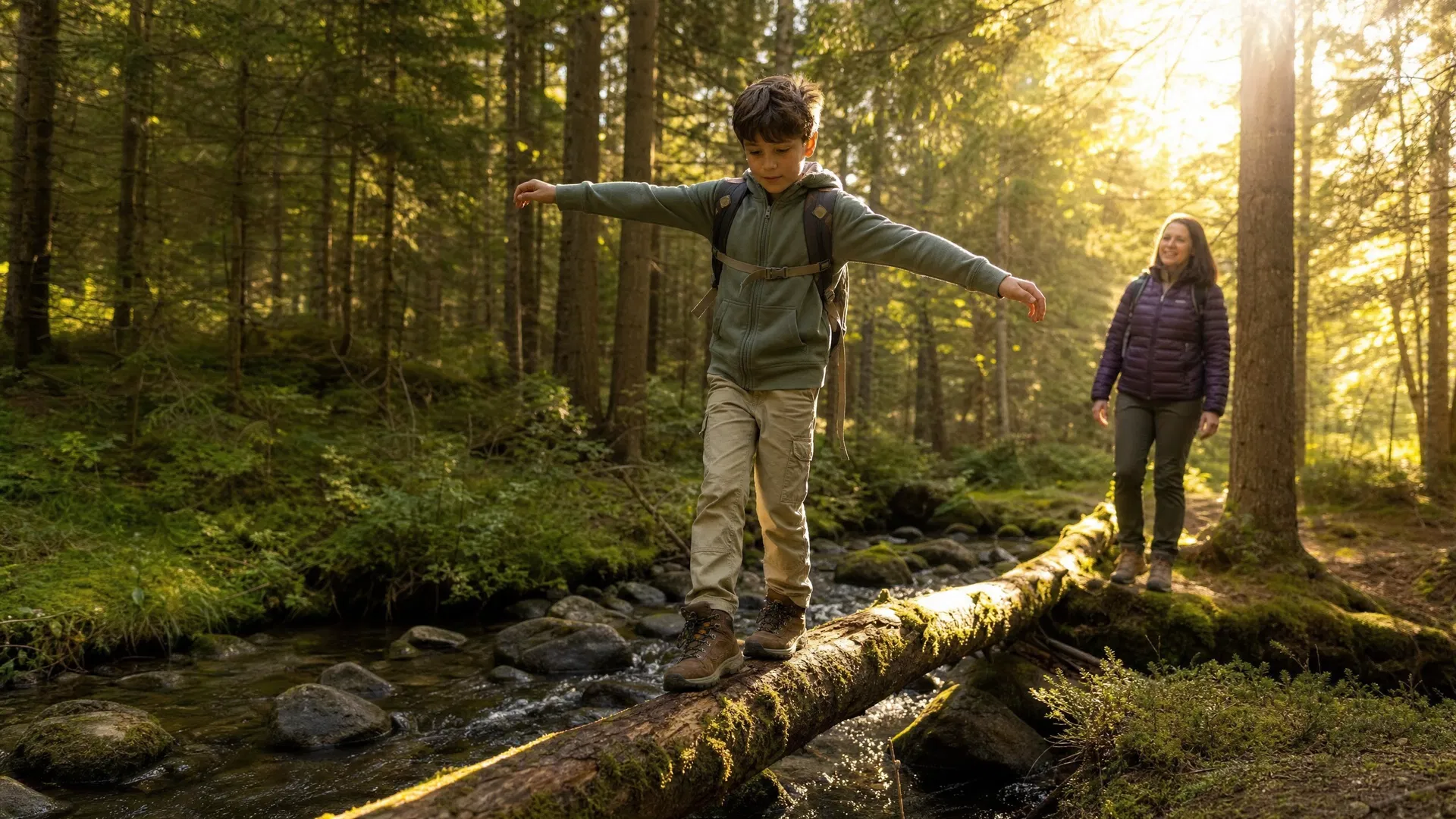
Hiking is a full-body corrective exercise. Every root, rock, and muddy patch on a local trail forces a child's brain to map their physical position in space — a process known as Sensory Integration. This "unstructured play" builds the resilience and muscle awareness that digital environments simply cannot replicate.
Ready to get started?
Download the free Made for the Mountain Family Hiking Checklist — everything you need to pack for a safe, sensory-rich hike with kids of all ages.
Get it free →How Does the Trail Solve Nature Deficit Disorder?
Coined by Richard Louv, Nature Deficit Disorder describes the psychological and physical costs of alienation from nature. In our regional parks, the trail acts as a "low-tech" classroom that fixes digital fatigue.
| Developmental Need | Trail-Based Solution | Recommended Tool |
|---|---|---|
| Proprioception | Navigating uneven rocks and steep inclines. | Merrell Moab 3 Boots |
| Vestibular Health | Balancing on fallen logs or crossing streams. | Black Diamond Trekking Poles |
| Focus / Attention | Identifying local flora or spotting wildlife. | Mighty Magnifier |
| Hydration / Endurance | Managing physical output over long distances. | CamelBak Mini M.U.L.E. |
Can a "Digital-Outdoor Swap" Actually Work?
One of the most effective strategies we use is the "Digital-Outdoor Swap." For every hour your child spends on a trail, they earn one hour of "digital rewards." It reframes outdoor time as something earned rather than something imposed — and kids respond to that framing remarkably well.
- The 1,000-Hour Roadmap: Our complete guide to fitting nature into a busy family schedule shows how to aim for at least 20 hours of nature into your busy school week to combat the "accessibility gap" of structured sports. It sounds like a lot, but even 30-minute backyard sessions count toward the total.
- Gamification: Making hiking fun through games and challenges helps bridge the gap for kids who crave digital feedback while they are physically "rewilding." These tools make the trail feel like a video game — without the couch.
What Gear Do You Need for a "Physical Therapy" Hike?
You do not need elite mountaineering gear to see results, but "rugged but reachable" equipment ensures the therapy is not cut short by a meltdown. Check out our essential hiking gear recommendations for kids for a complete overview. For detailed packing guidance, see our trail first aid guide.
- Supportive Footwear: For the rocky terrain of the NJ/PA area, a boot like the KEEN Targhee Mid Waterproof provides the toe protection and "ground feel" necessary for sensory development. The wide toe box lets little feet splay naturally on uneven ground.
- Safety First: Always carry a TickCheck Premium Tick Remover Kit and a basic Adventure Medical Kit to address "safety anxiety" before you leave the trailhead. When parents feel prepared, kids feel safe — and that confidence is contagious.
- The "Summit Reward": Use a high-quality snack, like Mission Meats Grass-Fed Beef Sticks, as positive reinforcement for completing a difficult section of the trail. Protein-dense, individually wrapped, and genuinely delicious — they are the perfect summit treat.
Trail Tip
If you cannot reach a mountain this weekend, remember that the Backyard Destination is your second living room. Use a Backyard Adventure Bingo card or a simple magnifying glass to turn your immediate surroundings into a "Micro-Hike" training ground for bigger adventures.
Start the Swap This Weekend
Download the free Made for the Mountain Family Hiking Checklist — a complete packing guide for families with kids of all ages, including a gear section built for sensory-rich trail time.
Download the Free Checklist →