
Disclosure: This post contains affiliate links. We may earn a small commission if you purchase through our links, at no extra cost to you.
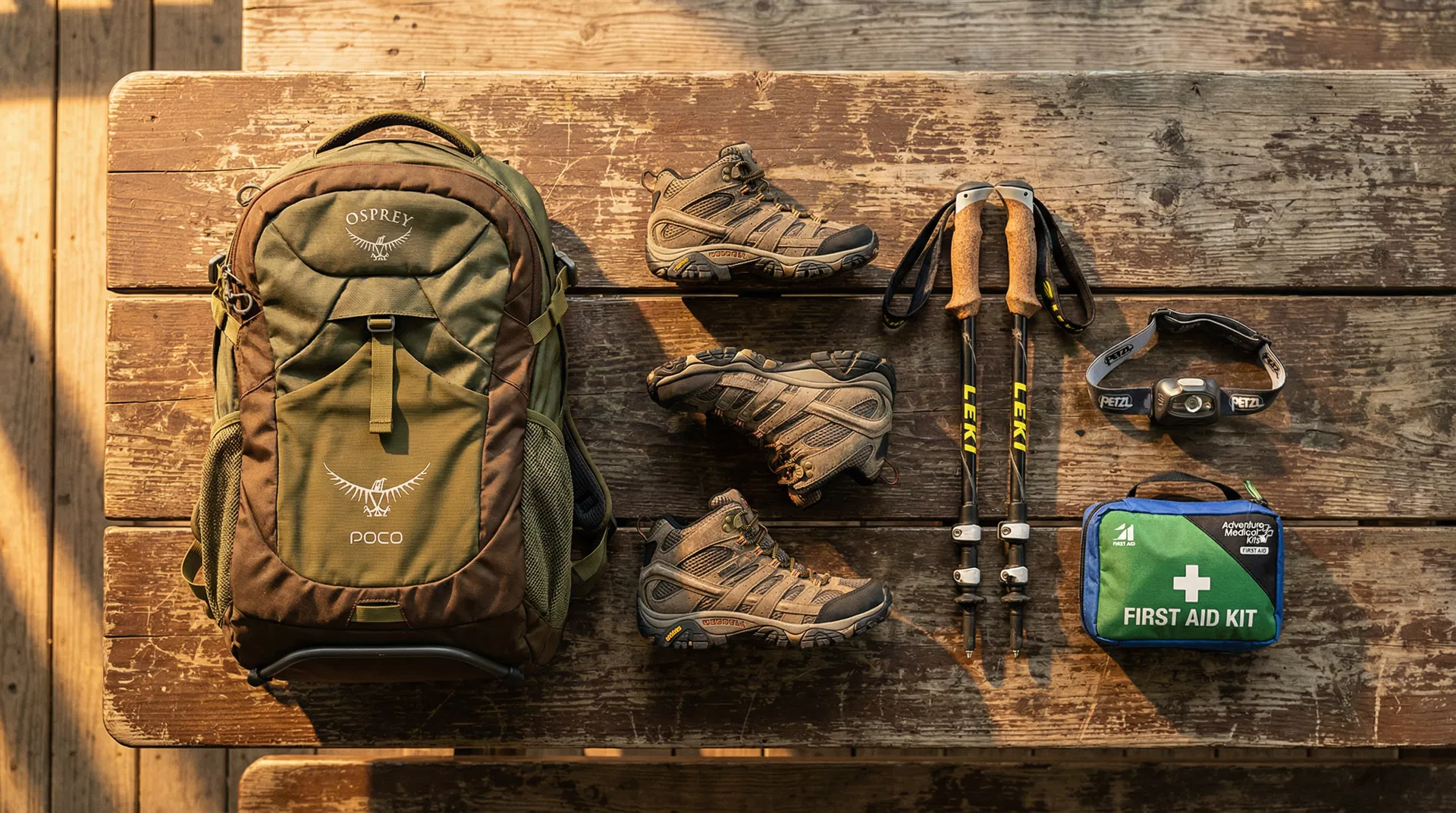
The outdoor gear market is full of products that promise to make family hiking easier. Most of them are unnecessary. A few of them are genuinely transformative. This guide cuts through the marketing noise and focuses on the five categories of gear that make a measurable difference in how far your family can go, how safe they are on the trail, and how much they enjoy the experience. When paired with proper first aid preparation, the right gear creates a foundation for safe, enjoyable family adventures.
Each recommendation below is based on a specific problem that commonly derails family hikes, followed by the technical solution and the products that best deliver it.
Before you buy anything
Grab the free Made for the Mountain Family Hiking Checklist — a complete gear guide built for families with kids of all ages, so you know exactly what to prioritize.
Get it free →1. Footwear: Why Sneakers Fail on Technical Terrain
The Problem: Athletic sneakers are designed for flat, predictable surfaces. On trails with loose rock, wet roots, and uneven terrain, they provide inadequate ankle support, minimal grip, and no waterproofing. A child who slips on a wet rock or turns an ankle on a root-covered trail is not just injured — the hike is over, and the memory of the experience is negative.
The Solution: A purpose-built kids' hiking boot with a Vibram or equivalent rubber outsole, waterproof membrane, and ankle support. The investment pays off immediately in confidence and safety on technical terrain.
Technical Specs to Look For: Vibram or equivalent rubber outsole with multi-directional lugs, waterproof membrane (Gore-Tex or proprietary equivalent), reinforced toe cap, and a wide toe box to accommodate growing feet without blistering.
The Merrell Kids' Moab 3 Hiking Boot is the most consistently recommended kids' hiking boot across family hiking communities — waterproof, Vibram outsole, and available in wide widths. The Keen Kids' Targhee Low Waterproof is an excellent lightweight alternative for warmer conditions.
2. Moisture-Wicking Layers: The Danger of "Cotton is Rotten"
The Problem: Cotton absorbs moisture and holds it against the skin. On a warm day, a sweaty cotton t-shirt becomes cold and clammy the moment the child stops moving. In cooler conditions, this creates a genuine hypothermia risk. The "cotton is rotten" rule is one of the oldest principles in outdoor education, and it applies equally to children.
The Solution: A moisture-wicking base layer made from synthetic materials (polyester, nylon) or merino wool. These fabrics pull moisture away from the skin and allow it to evaporate, keeping the child dry and at a stable temperature regardless of exertion level.
Technical Specs to Look For: Synthetic base layers should be at least 80% polyester with a mesh or grid construction for airflow. Merino wool layers should be 100% merino at 150–200 gsm weight for three-season use. Avoid blends with more than 20% cotton.
For rain protection, the Columbia Kids' Watertight Rain Jacket is a reliable, packable option that fits over base layers without restricting movement.
3. Hydration: The Efficiency of Hydration Bladders
The Problem: Traditional water bottles are heavy, shift the center of gravity in a child's pack, and require stopping to access. This leads to infrequent drinking and rapid dehydration, which manifests as lethargy and sudden meltdowns on the trail.
The Solution: A dedicated kids' hydration pack with a low-profile bladder. Continuous, hands-free access to water encourages micro-dosing hydration, keeping energy levels stable while maintaining an ergonomic load distribution. For a deeper dive into hydration options, see our complete review of the best kids' hydration packs.
Technical Specs to Look For: 1.5L (50 oz) reservoir, high-flow self-sealing bite valve, narrow width with a sternum strap equipped with an emergency safety whistle, and BPA/BPS-free polyurethane reservoir.
The CamelBak Kids' Mini M.U.L.E. Hydration Pack is the most popular choice for ages 4–9. For older kids who want more storage, the Osprey Kids' Moki 1.5 is an excellent step up.
Pro-Tip: Fill the bladder with 50% ice and 50% water. The melting ice keeps their core temperature down during warm hikes. Teach them to blow the water back into the tube after drinking — this prevents the line from freezing in winter or getting unpleasantly warm in the sun.
4. The 'Pacing' Tool: Trekking Poles and Specialized Carriers
The Problem: Younger children lack the stride length and muscular endurance to maintain a steady pace over uneven terrain, leading to rapid fatigue and joint strain during descents.
The Solution: For toddlers, a hard-framed child carrier ensures safety and weight distribution for the parent. For older kids (ages 5+), adjustable trekking poles act as a pacing tool, engaging the upper body, improving balance on river crossings, and reducing impact forces on their knees.
For trekking poles, look for 7075 aluminum shafts (more durable than carbon fiber for kids), external lever locks (flick-locks), and EVA foam or cork grips sized for smaller hands. The Black Diamond Kids' Trail Trekking Poles meet all of these criteria.
For toddler carriers, the Osprey Poco Plus Child Carrier is the benchmark — adjustable torso length, load-lifter straps, a locking kickstand, 5-point safety harness, and a deployable sunshade.
5. Lighting: The Necessity of a Headlamp for Day Hikes
The Problem: Relying on smartphone flashlights when a day hike takes longer than expected is a critical error. Smartphones drain batteries quickly in cold weather, require a free hand, and offer poor beam distance. Navigating rocky, root-covered trails in the dark without proper lighting is a primary cause of search-and-rescue calls.
The Solution: A dedicated, child-safe headlamp. Hands-free illumination allows kids to maintain their balance and use their hands for scrambling if caught out past sunset.
Technical Specs to Look For: 30–50 lumens output, flood beam for broad proximity lighting, breakaway elastic headband to prevent strangulation risks, and a single-button interface with auto-shutoff.
The Black Diamond Spot 400 Headlamp is a reliable choice for the whole family. Every child gets their own headlamp in their pack — no exceptions, even if you plan to be back by noon.
The Bottom Line
Investing in the right outdoor gear transforms a stressful survival march into an enjoyable family adventure. By prioritizing functional footwear, technical layers, and proper safety equipment, you are engineering a successful experience on the trail. Get the gear right, and the mountain will take care of the rest. Don't forget to pair gear selection with proper nutrition and snack planning for maximum trail success.
For a complete checklist of everything to pack — from safety essentials to snacks — grab the free Made for the Mountain Family Hiking Checklist. It covers every category of gear for families with kids of all ages, and it is free to download and print before your next hike.
Get the Complete Gear Checklist
The free Made for the Mountain Family Hiking Checklist covers every gear category — safety, footwear, layers, hydration, and more — built for families with kids of all ages.
Download the Free Checklist →This article contains affiliate links. Made for the Mountain may earn a small commission on purchases made through these links at no additional cost to you. We only recommend products we genuinely believe in.