
Affiliate Disclosure: Made for the Mountain is a participant in the Amazon Services LLC Associates Program, an affiliate advertising program designed to provide a means for sites to earn advertising fees by advertising and linking to Amazon.com. If you click a product link and make a purchase, we may earn a small commission at no additional cost to you. We only recommend products we genuinely use and believe in.
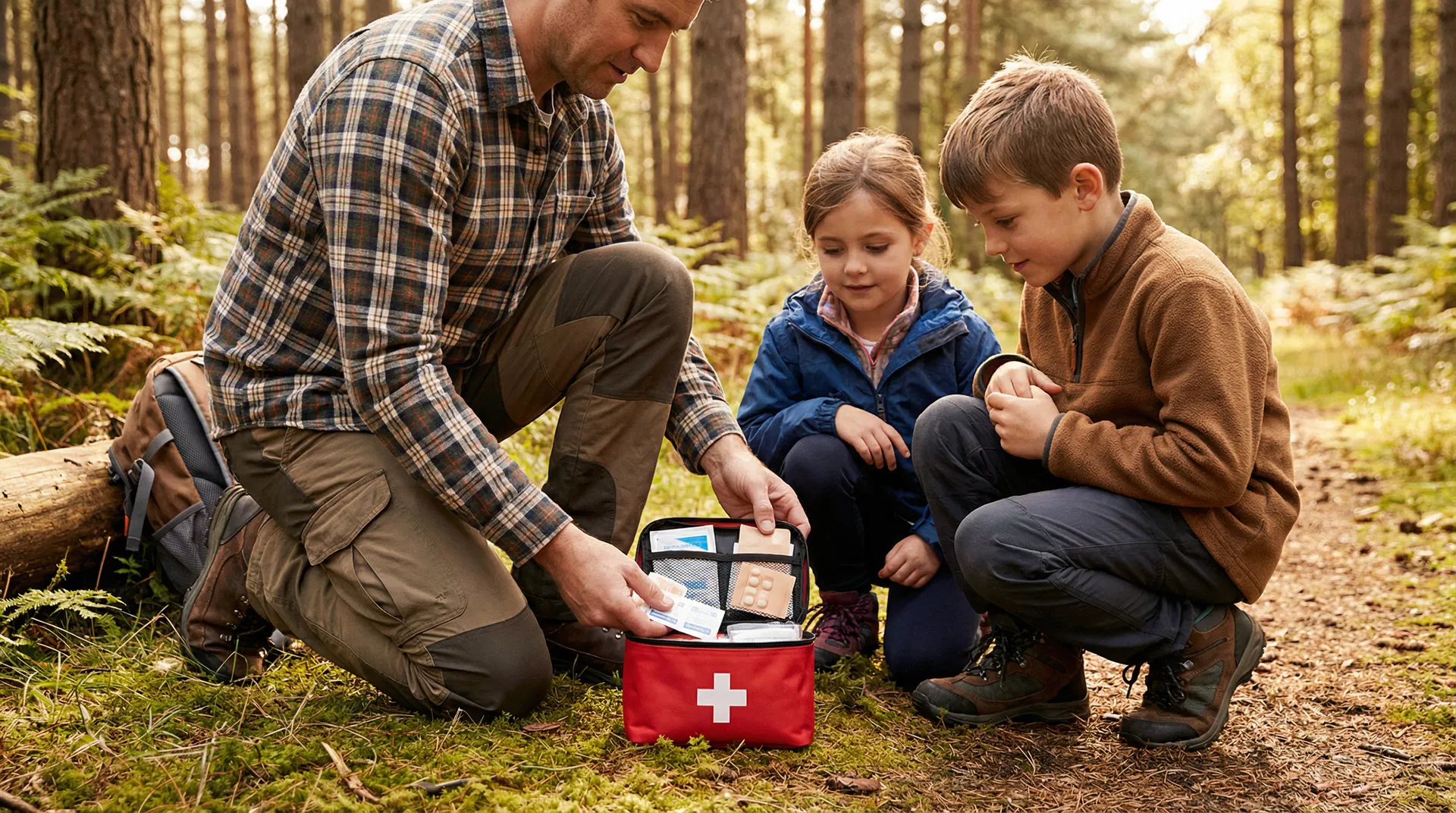
Most family hiking first aid kits are built around the assumption that the worst thing that will happen is a scraped knee. A standard drugstore kit — a handful of adhesive bandages, some antiseptic wipes, and a tiny roll of gauze — is designed for the kitchen, not the trail. The wilderness presents a completely different category of risk, and parents who venture into the backcountry with young children need to think differently about what they carry.
This is not a list of exotic survival gear. Every item below is practical, lightweight, and available on Amazon. The goal is to close the gap between what most families carry and what they actually need.
Before your next hike
Grab the free Made for the Mountain Family Hiking Checklist — includes a complete safety and first aid section built for families with kids of all ages.
Get it free →1. The 'Ouch' Kit: Beyond Standard Band-Aids
Standard adhesive bandages fail on the trail in two critical ways: they do not adhere to sweaty or dirty skin, and they are not sized for the kinds of abrasions children get when they fall on gravel or rock. A proper trail kit replaces generic bandages with moleskin blister pads, knuckle and fingertip bandages, and at least one conforming gauze roll for larger wounds.
The Adventure Medical Kits Mountain Series is an excellent foundation. It is organized by injury type, waterproofed, and includes the blister care supplies that standard kits omit entirely.
2. Allergy Defense: Liquid Benadryl and EpiPen Reminders
Insect stings and plant contact are the most common triggers for allergic reactions on the trail. For children with known allergies, an EpiPen is non-negotiable — but many parents forget to transfer it from the car to the pack. Build a habit of checking for it before every hike, the same way you check for water.
Even for children without diagnosed allergies, liquid diphenhydramine (Benadryl) belongs in every family kit. Allergic reactions can develop at any age, and liquid formulations work faster than tablets in children. Keep a sealed, single-dose bottle in a waterproof bag.
3. The Tick Protocol: Fine-Tipped Tweezers and a Storage Vial
Tick removal is one of the most common trail first aid needs for families hiking in wooded areas, and it is also one of the most commonly done incorrectly. The only safe removal method is a fine-tipped set of tweezers grasping the tick as close to the skin as possible and pulling straight up with steady, even pressure. Never twist, squeeze the body, or use petroleum jelly.
After removal, place the tick in a small sealed vial or zip-lock bag. If your child develops a rash, fever, or flu-like symptoms within 30 days, that tick becomes important evidence for your physician. A small plastic vial weighs almost nothing and can be the difference between a clear diagnosis and weeks of uncertainty.
4. Hydration Rescue: Electrolyte Tabs for Heat Exhaustion
Water alone is sometimes not enough to recover from heavy sweating on a steep trail. Dehydration sneaks up quickly, especially when kids are distracted by exploring. Electrolyte tablets or oral rehydration salts are incredibly lightweight, taking up virtually zero space in your pack while offering massive utility.
Dropping a low-sugar electrolyte tab into a water bottle instantly replenishes lost sodium, potassium, and magnesium. This simple addition can turn a lethargic, cranky child back into an energetic hiker within twenty minutes. Keep a tube of Nuun Sport Hydration Tablets in your pack for these moments.
5. Small Wound Care: Antiseptic Wipes That Don't Sting
Cleaning a scraped knee on the trail is usually met with tears, but using an alcohol wipe on that scrape will result in a full-blown meltdown. Alcohol wipes sting intensely, which makes children fight the first aid process.
Instead, pack Benzalkonium Chloride (BZK) antiseptic wipes. These wipes effectively clean wounds and kill germs without the painful burn of alcohol. By using non-stinging wipes, you remove the fear and pain from wound care, making the process calmer for both you and your child.
6. Emergency Communication: The Role of a Whistle vs. a Cell Phone
Many parents rely entirely on their cell phones for emergency communication. However, cell service is notoriously unreliable in dense woodlots and mountainous terrain. Furthermore, cell phone batteries drain rapidly when searching for a signal.
An emergency whistle is a critical piece of gear that weighs less than an ounce and never runs out of battery. The sound of a whistle carries significantly further through dense woods than the human voice, and blowing a whistle requires far less energy than screaming. Teach your children the universal distress signal: three sharp, loud blasts. Every person on the trail — including the kids — should have a Fox 40 Classic Emergency Whistle clipped to their pack or jacket.
7. The 'Comfort' Item: Legitimate Medical Distraction
Do not underestimate the medical value of a simple lollipop, a sheet of favorite stickers, or a small toy. In pediatric emergency medicine, distraction is a clinically validated technique for managing pain, anxiety, and fear.
When a child takes a hard fall and goes into mild shock or panic, their pain perception spikes. Handing them a lollipop provides oral stimulation and redirects their focus away from the injury. This simple comfort item calms their nervous system, allowing you to assess the injury, clean the wound, and apply a bandage without a struggle. It weighs almost nothing but is one of the most effective tools in a parent's first aid arsenal.
When to Turn Back: The Red Flag Checklist
Being prepared means knowing how to treat minor injuries, but it also means knowing when a situation is beyond the scope of your pack. Turn back and seek professional medical attention immediately if you observe any of the following:
- Head Injuries: Any loss of consciousness, confusion, vomiting, or unequal pupil size after a fall.
- Severe Bleeding: Bleeding that cannot be stopped after several minutes of direct, firm pressure.
- Allergic Reactions: Swelling of the face, lips, or tongue, difficulty breathing, or the development of hives over the body.
- Heat Illness: Extreme lethargy, confusion, cessation of sweating, or a rapid, weak pulse.
- Deformity: Any suspected broken bone or joint dislocation.
Pro-Tip: Organizing Your Go-Bag
The secret to actually having your first aid kit when you need it is modular organization. Keep your wilderness first aid essentials packed in a dedicated, brightly colored, waterproof dry bag. Never unpack it. When you return from a hike, immediately restock whatever you used. Keep this dedicated "Go-Bag" hanging right next to your hiking boots or in the trunk of your car. When it is time to head out, you simply grab it and drop it into your daypack.
If you want a solid foundation to build your go-bag upon, the Adventure Medical Kits Mountain Series is an excellent starting point — organized by injury type, waterproofed, and trail-tested.
Ready to Build Your Trail Kit?
Get the free Made for the Mountain Family Hiking Checklist — includes a complete safety and first aid section built for families with kids of all ages.
Download the Free Checklist →This article contains affiliate links. Made for the Mountain may earn a small commission on purchases made through these links at no additional cost to you. We only recommend products we genuinely believe in.