
Affiliate Disclosure: Made for the Mountain is a participant in the Amazon Services LLC Associates Program, an affiliate advertising program designed to provide a means for sites to earn advertising fees by advertising and linking to Amazon.com. If you click a product link and make a purchase, we may earn a small commission at no additional cost to you. We only recommend products we genuinely use and believe in.
Here is the honest truth about hiking with a toddler: it is nothing like hiking without one. The pace is slower, the distance is shorter, and the agenda is entirely dictated by a small person who may decide that a particular stick deserves twenty minutes of investigation. And yet — it is also some of the most rewarding time a family can spend outdoors.
Toddlers are wired for exploration. The trail is a sensory feast for them: the sound of water, the texture of bark, the smell of pine needles, the thrill of a muddy puddle. Parents who adjust their expectations and lean into that sense of wonder find that hiking with a one, two, or three-year-old is not just possible — it is genuinely fun.
Adjust Your Definition of a Successful Hike
The single most important mindset shift for hiking with a toddler is letting go of distance as the measure of success. A half-mile hike that takes ninety minutes because your two-year-old stopped to examine every rock is a wildly successful hike. A two-mile hike completed in tears is not.
Set a time goal, not a mileage goal. Plan for one to two hours on the trail and choose a route where turning around at any point is easy. The goal is to build a positive association with being outdoors — and that happens through enjoyment, not endurance.
Choosing the Right Trail
For toddlers ages one to three, the ideal trail has four characteristics:
Short and flat. Aim for one mile or less with minimal elevation gain. Toddlers who are walking independently average less than half a mile per hour — and that is on a good day. Trails with gentle grades and smooth surfaces keep the experience positive.
Interesting features. A creek, a waterfall, a bridge, a big rock to climb — toddlers need destinations within the hike, not just at the end of it. Trails with natural features every quarter mile hold attention far better than a straight forest path.
Easy turnaround. Out-and-back trails are ideal because you can turn around the moment the mood shifts. Loop trails can trap you into finishing even when a meltdown is underway.
Forgiving terrain. Avoid trails with significant drop-offs, scrambling sections, or exposed roots that make carrying a toddler difficult. Wide, well-maintained paths give everyone more confidence.
Before the first trail
Grab the free Made for the Mountain Family Hiking Checklist — a complete packing guide built for families with kids of all ages, including a dedicated toddler section.
Get it free →Essential Gear for Hiking with a Toddler
The Child Carrier: Your Most Important Investment
For any hike longer than half a mile, a quality child carrier is essential. Toddlers tire quickly, and being able to scoop them up and keep moving — without ending the hike — is the difference between a good day and a frustrating one.
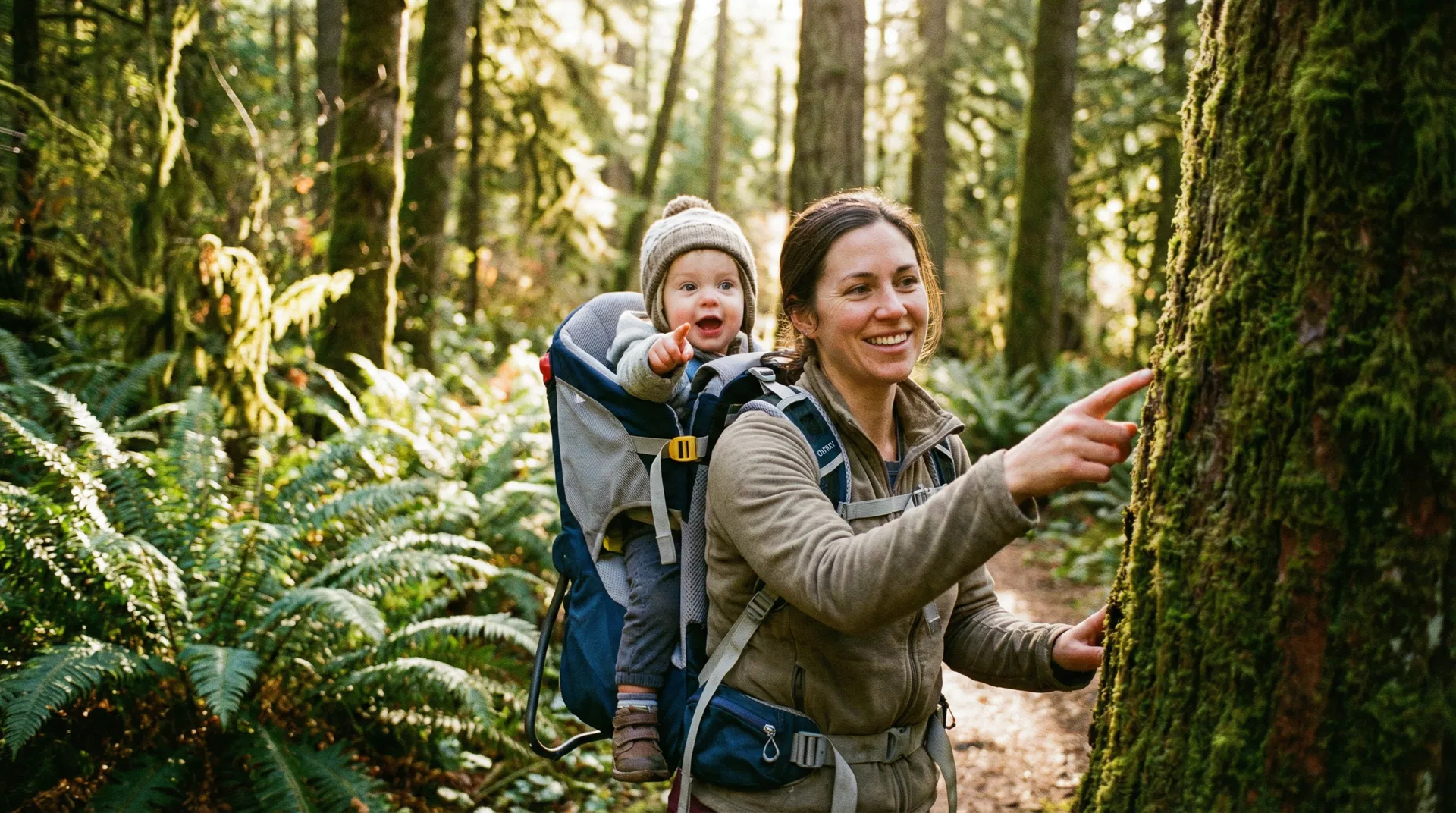
The Osprey Poco Plus is the most widely recommended carrier for hiking families. It features an ergonomic hip belt that transfers weight to the parent's hips rather than the shoulders, a built-in sunshade, a kickstand for loading and unloading without a second adult, and enough storage for a full day's worth of snacks and gear.
A more budget-conscious option is the Deuter Kid Comfort Active SL, which offers similar comfort and safety features at a lower price point. Both carriers accommodate children from approximately nine months through age three or four.
Footwear That Stays On
Toddlers who are walking need shoes that grip, protect, and — critically — stay on their feet. Look for closed-toe shoes with rubber outsoles and ankle support. The Merrell Kids' Moab 3 is available in toddler sizes and offers waterproofing that parents appreciate when creek crossings are involved.
Hydration
Toddlers dehydrate faster than adults and often don't recognize thirst until they are already behind. Bring more water than you think you need — a minimum of 16 ounces per toddler for a one-hour hike — and offer it proactively every 20–30 minutes. The Hydro Flask Kids Wide Mouth keeps water cold for hours and has a straw lid that toddlers can manage independently.
First Aid
A compact first aid kit is non-negotiable on any trail with a toddler. Falls happen. Scrapes happen. Bee stings happen. Keep it accessible in the top pocket of your pack, not buried at the bottom.
Sun Protection
Apply broad-spectrum SPF 50+ sunscreen before leaving the car. The Neutrogena Pure & Free Baby Sunscreen is mineral-based and safe for sensitive toddler skin. A wide-brimmed sun hat is equally important; toddlers in carriers are at eye level with the sun and have no way to shade themselves.
Keeping a Toddler Engaged on the Trail
Toddlers are not bored by nature — they are overwhelmed by it in the best possible way. The key is slowing down enough to let them engage with what they find interesting, rather than pushing them toward the destination.
Let them walk when they want to. Even if it adds thirty minutes to the hike, allowing toddlers to walk independently builds stamina, confidence, and a genuine love for the trail. Save the carrier for when they are tired, not as a default.
Name what you see. "That's a red maple leaf. Can you find another one?" Simple narration turns a walk into a learning experience and keeps toddlers mentally engaged.
Bring a nature bucket. A small mesh bag for collecting treasures — pinecones, interesting rocks, fallen leaves — gives toddlers a purpose on the trail. Empty it before heading home to practice Leave No Trace principles.
Pack the right snacks. Snacks are motivational currency on the trail. Bring things that are easy to eat while walking: raisins, crackers, cheese cubes, fruit pouches. Offer snacks proactively rather than waiting for hunger to trigger a meltdown.
Handling the Hard Moments
Every hike with a toddler includes at least one hard moment. When a toddler plants themselves and refuses to move, resist the urge to negotiate. Offer the carrier, offer a snack, or simply sit down with them. Two minutes of patience usually resolves what ten minutes of coaxing cannot.
If a toddler is genuinely overtired, hungry, or overstimulated, the hike is over. Turn around without guilt. A short, positive hike that ends before the meltdown is infinitely more valuable than a long hike that ends in tears. The goal is always the next hike.
Get the Free Family Hiking Checklist
Everything you need to pack for a toddler-friendly hike, organized by category and age.
Download the Free Checklist →This article contains affiliate links. Made for the Mountain may earn a small commission on purchases made through these links at no additional cost to you.